
FikarFix...
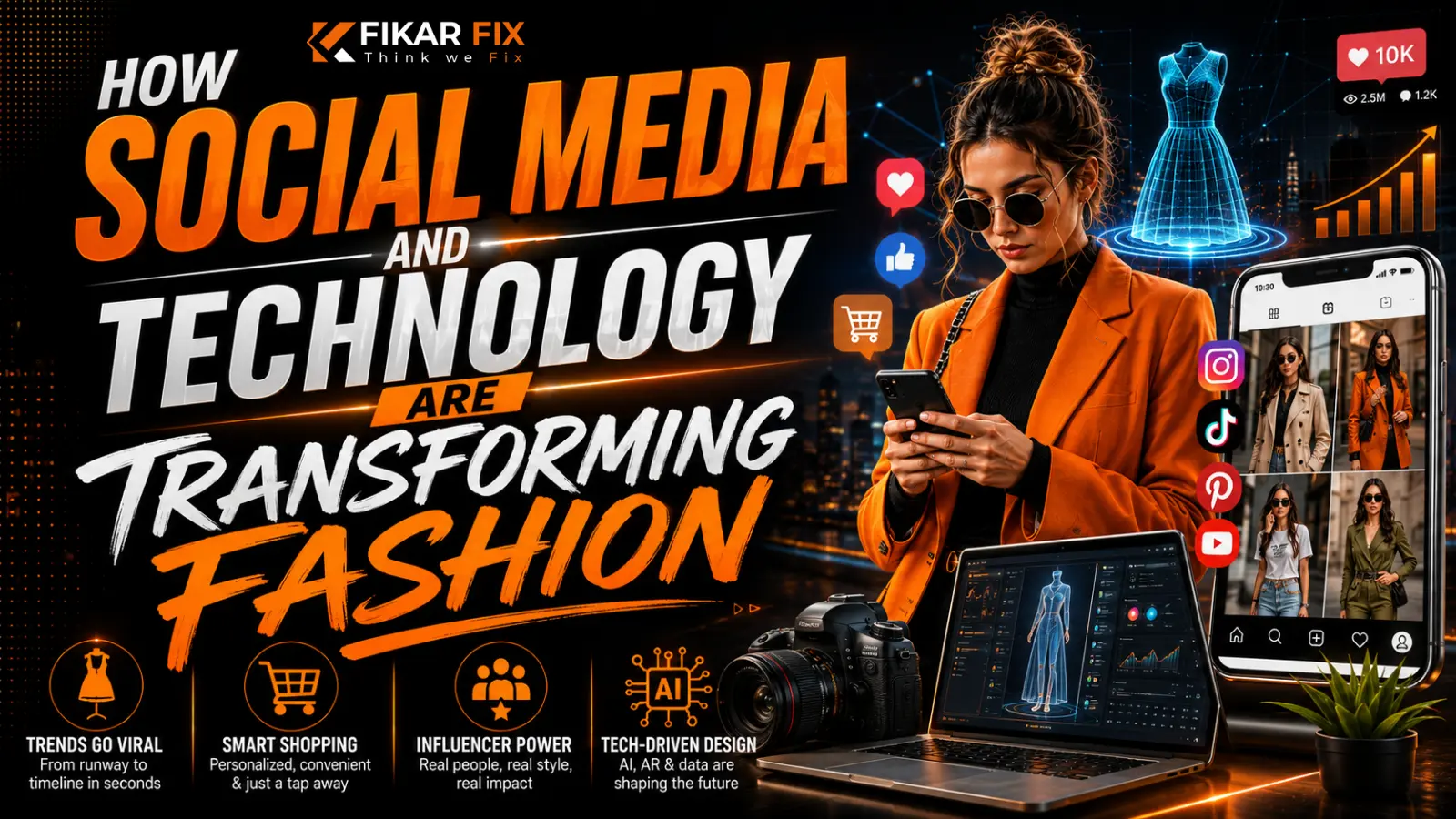
How Social Media and Technology Are Transforming Fashion
Aug 28, 2026
Social Media Marketing
73 views
How Social Media and Technology Are Transforming Fashion
From Runways to Instagram: How Fast Fashion Trends Go Digital
Umar Shahzad Nasir
Fashion no longer waits for the runway.
A designer can showcase a new look today, and within hours it can appear across Instagram, TikTok, Pinterest, and online stores.
Runway → Social Media → Viral Trend → Online Sales
Technology has completely changed how fashion brands discover trends, launch products, connect with customers, and turn attention into sales.
For fashion startups and growing brands in the US and UK, the opportunity is bigger than simply being on social media.
It's about building a digital fashion experience.
1. Trends Move at Internet Speed

A fashion trend that once took months to spread can now become popular within days—or even hours.
A designer posts a collection.
An influencer wears it.
People share it.
The algorithm pushes it to millions.
And suddenly, customers want it.
The new fashion cycle:
Discover → Create → Post → Go Viral → Sell
This speed creates both an opportunity and a challenge.
Brands have to move quickly without sacrificing quality or identity.
2. Technology Is Changing How Fashion Is Designed
Modern fashion designers have access to tools that make the creative process faster and more efficient.
3D Fashion Design
Instead of producing multiple physical samples, designers can visualize garments digitally before production.
This can help reduce:
- Material waste
- Sampling costs
- Development time
AI-Powered Trend Research
AI can help brands analyze large amounts of online content to identify patterns in:
Colors • Styles • Searches • Consumer Interests
The designer still makes the creative decision.
But technology can provide better information to make that decision.
3. Social Media Has Become the New Fashion Storefront

Think about the traditional customer journey:
See Advertisement → Visit Store → Browse → Decide → Purchase
Now it can look like this:
See Reel → Tap Product → Visit Website → Purchase
The distance between inspiration and transaction has dramatically decreased.
For small fashion brands, this is powerful.
You don't necessarily need a huge physical retail network to introduce a product to customers.
You need:
Good Product + Strong Visuals + Smart Content + Smooth Digital Experience
4. A Simple Example
Imagine a small fashion startup in London launching a limited-edition jacket.
Instead of producing thousands of pieces immediately, the brand could:
Step 1
Create a digital concept.
Step 2
Share teaser content on Instagram and TikTok.
Step 3
Track audience reactions.
Step 4
Launch a limited quantity.
Step 5
Use customer feedback to decide whether to expand production.
This turns social media into more than a marketing channel.
It becomes a real-time market research tool.
5. Influencers Can Turn Attention Into Demand

Fashion is highly visual.
That's why creators and influencers can have a major impact on how quickly a product gains attention.
But successful brands shouldn't simply ask:
“How many followers does this influencer have?”
A better question is:
“Does this creator influence the people we want to reach?”
A smaller creator with an engaged niche audience can sometimes be more valuable than a celebrity with millions of followers but little relevance to the brand.
6. From Likes to Loyalty
Getting a viral post is great.
Building a brand is better.
A fashion business needs to turn temporary attention into long-term relationships.
That means creating a consistent experience across:
↓
Website
↓
Product Page
↓
Purchase
↓
Email / Community
↓
Repeat Customer
This is where digital strategy becomes more important than simply posting attractive pictures.
7. Sustainability Is Becoming Part of the Digital Story

Today's fashion customer may want to know more than:
“Does it look good?”
They may also ask:
Where was it made?
What materials were used?
How long will it last?
Is the brand reducing waste?
Digital platforms give brands an opportunity to communicate these stories through videos, behind-the-scenes content, product pages, and educational posts.
Transparency can become part of the brand identity.
The FikarFix Perspective
For FikarFix, the biggest lesson isn't simply that fashion is moving online.
It's that every industry is becoming more digital, visual, and connected.
A fashion brand may need:
- Website
- E-Commerce
- Social Media
- SEO
- Content Creation
- UI/UX
- Digital Marketing
- AI Automation
These aren't separate pieces anymore.
They work together as one digital ecosystem.
Imagine a customer discovering a fashion brand through TikTok, visiting its website, exploring a beautifully designed product page, receiving an automated follow-up email, and eventually becoming a repeat customer.
That's the kind of journey smart digital strategy can create.
What Fashion Brands Can Learn
- Move Fast
- Use Data
- Build Your Own Platform
- Make Every Touchpoint Visual
- Automate Repetitive Work
Final Takeaway
The future of fashion isn't just about what people wear.
It's about how they discover it, experience it, share it, and buy it.
Runways still create inspiration.
But today, Instagram, TikTok, websites, AI, and digital commerce can determine how quickly that inspiration becomes a business opportunity.
For fashion startups and growing brands in the US and UK, the question isn't:
“Should we go digital?”
It's:
“How smart can our digital presence become?”
FikarFix — Think. We Fix.
Recent Posts
-
Boost Hostel Operations with a Smart Management Platform
Sep 25, 2026
-
YouTube SEO for Urdu Videos: Titles, Descriptions, Chapters and Subtitles
Sep 21, 2026
-
GPT-6 Astra vs Claude Fable 5.1: Which AI Model Fits Your Work?
Sep 20, 2026
-
GPT-6 Astra Features: AI That Moves From Ideas to Action
Sep 16, 2026
FikarFix
Ask about the company & projects
Hi, I am the FikarFix assistant. Ask me about the company, our services, or recent projects.