
FikarFix...
Smart School Management System: Simplify School Operations with Digital Solutions
Oct 15, 2026
Web Development
15 views
Smart School Management System: Simplify School Operations with Digital Solutions
How a School Management System Helps Schools Manage Students, Teachers, Attendance and Fees
Fatima Batool
Running a school involves much more than teaching students. School administrators must manage student records, monitor attendance, organise teacher schedules, collect fees and communicate with parents. When these responsibilities depend on paper registers, spreadsheets and separate communication channels, daily operations can become time-consuming and difficult to coordinate.
A School Management System brings essential administrative tasks into one digital workspace. It helps schools organise information, reduce repetitive work and maintain a clearer view of academic and administrative activities.
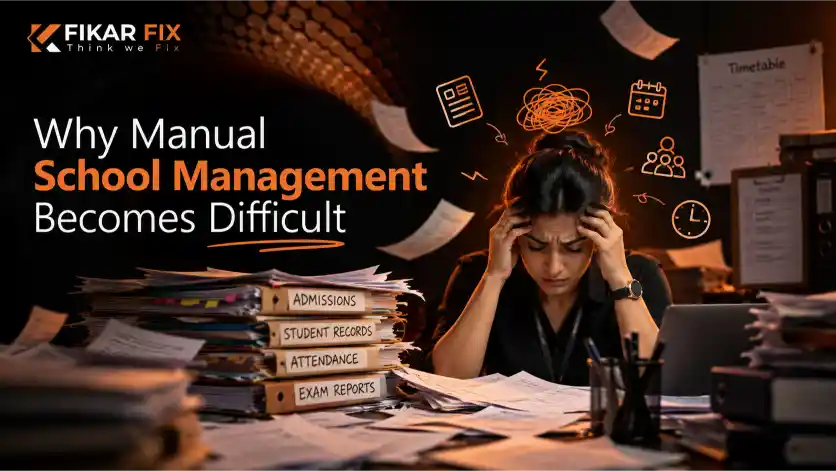
Why Manual School Management Becomes Difficult
Traditional school administration may work for a small institution, but managing growing numbers of students, teachers and classes can create challenges.
School staff may spend hours updating attendance registers, preparing fee records, organising timetables and searching for student information. Using separate files for each task can also lead to duplicated records, missed updates and communication delays.
A digital school management platform provides a more organised way to handle these responsibilities and helps authorised staff access the information they need.
What a School Management System Can Help You Manage
A smart school management platform can support the practical tasks involved in everyday school operations.
1. Student Records and Admissions
Managing student information is a central responsibility for every school. A digital system can help administrators maintain organised student profiles, admission details, class assignments and contact information.
Having student records in one workspace makes it easier to find information, update details and manage student administration throughout the academic year.

2. Attendance Management
Daily attendance is important for monitoring student participation and maintaining accurate school records.
A school management system can help teachers record attendance and allow administrators to review attendance information by student, class or date. Digital attendance records can reduce paperwork and make it easier to identify missing entries.
3. Fee Management and Payments
Managing tuition fees and other school charges requires accurate records and consistent follow-up.
A digital fee management system can help schools organise student fee structures, payment histories, outstanding balances and due dates. It can also make financial recordkeeping more structured and simplify the process of reviewing collections.
4. Teacher and Staff Management
Teachers and administrative staff are essential to school operations. Their schedules, responsibilities and professional records need to be organised.
A school management platform can help administrators maintain staff profiles, assign classes, organise responsibilities and manage relevant staff information in one place.
5. Timetable and Class Management
Preparing class schedules can become complicated when schools have multiple grades, teachers and subjects.
A digital platform can help organise class assignments, subject schedules and teacher timetables. Having schedules in a central workspace makes it easier for authorised staff to review arrangements and coordinate academic activities.
6. Parent and School Communication
Communication between schools and parents is an important part of student support.
A school management system can provide a structured way to share relevant updates, attendance information, fee reminders and academic announcements, depending on the communication features available.
Organised communication can help reduce dependence on scattered messages and make school updates easier to manage.
How a Smart School Management System Supports Daily Operations

A useful school management platform should fit the school's existing administrative workflow.
The process can begin with setting up academic classes, adding student and staff records, and organising the school's administrative information. Teachers and authorised staff can then use the system for their assigned responsibilities.
For example, teachers can record attendance, administrators can review student records and finance staff can manage fee information. Connected records help reduce the need to repeatedly enter or search for the same information across separate files.
The result is a more organised administrative process, with clearer access to information and less reliance on manual paperwork.
Administrative Work with FikarFix

Managing a school requires coordination, accurate records and consistent communication. A smart School Management System can bring essential administrative activities into a more organised digital workspace.
FikarFix helps businesses and organisations explore digital solutions that simplify everyday processes. If you are considering a School Management System, start by identifying your school's requirements and reviewing the features, workflows and support available.
Ready to make school administration more organised?
Contact FikarFix to discuss your digital management requirements and explore how a suitable solution could support your school's daily operations.
FikarFix — Think, We Fix
Frequently Asked Questions
What is a School Management System?
A School Management System is a digital platform designed to organise school administration, including student records, attendance, fee management, staff information and academic activities.
How does a School Management System help teachers?
Depending on its features, it can help teachers record attendance, review class schedules, access relevant student information and coordinate administrative tasks.
Can a School Management System help manage school fees?
Yes. Fee management features can help schools organise fee structures, payment histories, due dates and outstanding balances.
Is a School Management System suitable for small schools?
It can be suitable for small schools as well as larger institutions. The appropriate system depends on the school's size, budget, administrative needs and required features.
How can a school start using a digital management platform?
A school can begin by identifying its requirements, reviewing a product demonstration, preparing its records, setting up user access and training relevant staff before introducing the system into daily operations.
Recent Posts
FikarFix
Ask about the company & projects
Hi, I am the FikarFix assistant. Ask me about the company, our services, or recent projects.