
FikarFix...
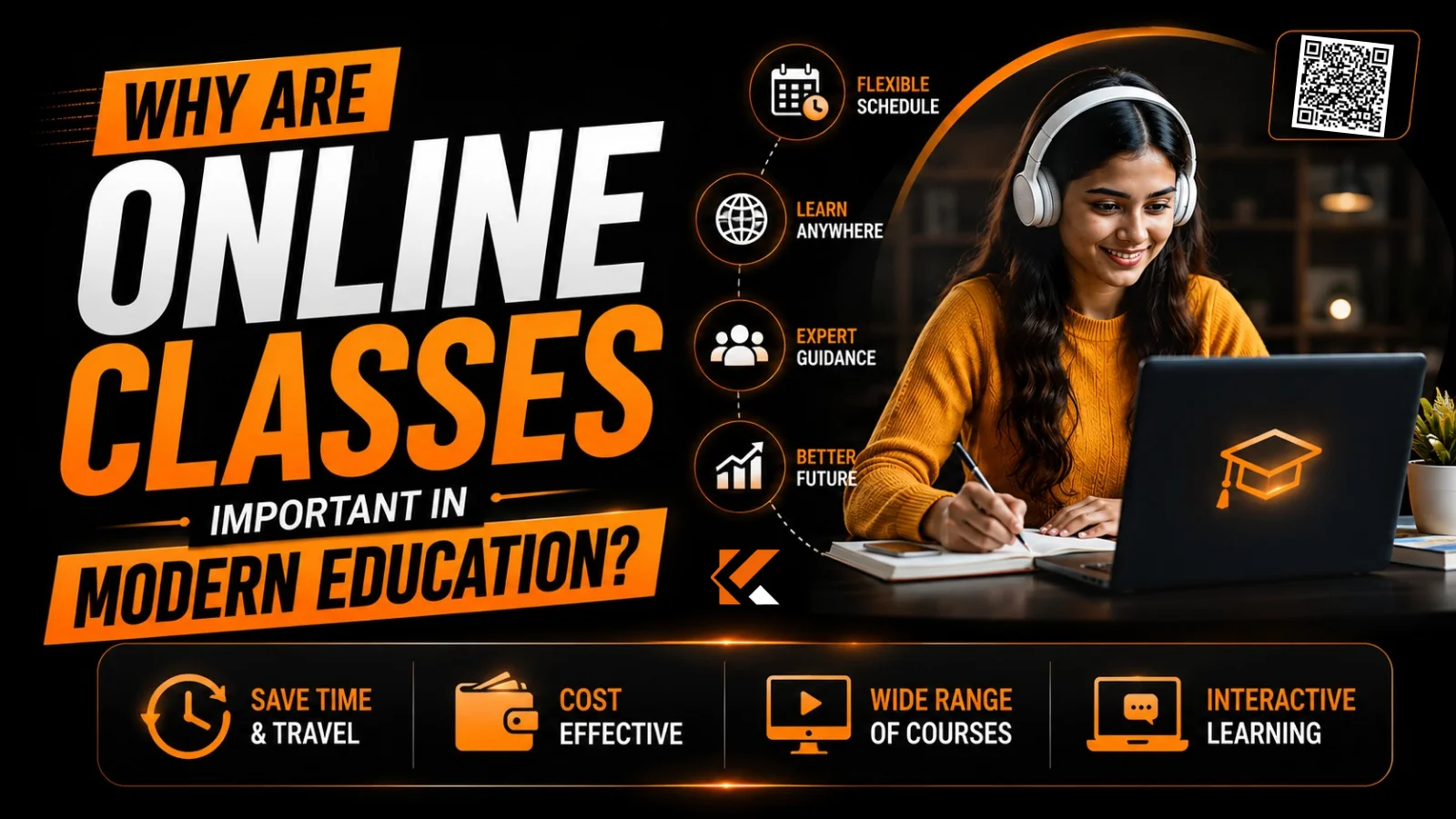
Why Are Online Classes Important in Modern Education?
Aug 17, 2026
eLearning & Online Classes
82 views
Why Are Online Classes Important in Modern Education?
Fatima Batool
Education is changing.
A classroom is no longer limited to four walls, a whiteboard, and a fixed timetable. With faster internet, digital learning platforms, video conferencing, and interactive educational tools, students can now learn from almost anywhere.
From schools and universities in the UK and US to professional training programs and online academies, online classes have become an important part of modern education.
But are online classes really better than traditional learning?
The answer isn't simply yes or no.
The real advantage comes from using technology to make education more accessible, flexible, interactive, and personalized.
What Are Online Classes?
Online classes are educational sessions delivered through digital platforms rather than exclusively in a physical classroom.
Students may attend lessons through:
- Live video classes
- Learning Management Systems (LMS)
- Recorded lectures
- Interactive quizzes
- Digital assignments
- Online discussion forums
- Virtual classrooms
- Educational apps
A student in Manchester can attend a class taught from another city.
A university student in New York can watch a recorded lecture after work.
A professional can learn a new skill without leaving home.
That's the flexibility of digital education.
1. Online Classes Make Education More Accessible

One of the biggest advantages of online education is accessibility.
Traditional education can involve:
Travel → Fixed Location → Fixed Schedule → Classroom
Online education can simplify this:
Internet → Digital Platform → Learning
This can be especially valuable for students who live far from educational institutions, work alongside their studies, have mobility challenges, or need more flexible learning arrangements.
Example
Imagine a working professional in London who wants to learn digital marketing.
A traditional evening course might require travelling across the city several times a week.
An online course could allow the same learner to attend classes from home after work.
The education becomes easier to fit into their existing life.
2. Flexible Learning Fits Modern Lifestyles

Not every student learns at the same time or in the same way.
Some students learn best in the morning.
Others prefer evening study.
Some need to replay a lesson several times before understanding a difficult concept.
Online learning can provide greater flexibility through:
Live Classes
for real-time interaction.
Recorded Lessons
for revision and review.
Digital Resources
for independent study.
Online Assignments
for practice and assessment.
This creates a learning experience that can better accommodate different schedules.
3. Students Can Learn at Their Own Pace
One of the limitations of traditional classrooms is that the teacher has to teach an entire group.
But students don't always learn at the same speed.
Imagine a mathematics lesson.
One student understands a concept immediately.
Another needs three additional explanations.
With recorded lessons and digital resources, the second student can pause, replay, review, and practice until the concept becomes clear.
This creates an important shift:
From “one pace for everyone”
to
“learning that can adapt to the student.”
4. Technology Can Make Learning More Interactive
Online education doesn't have to mean watching a teacher talk for an hour.
Modern digital learning can include:
🎥 Video lessons
🧩 Interactive activities
📊 Quizzes
💬 Live discussions
📝 Digital assignments
🎮 Gamified learning
🤖 AI-powered learning support
For example, a language-learning platform could combine video lessons with pronunciation exercises, quizzes, progress tracking, and instant feedback.
The result can be much more engaging than simply reading a textbook.
5. Online Classes Can Connect Students With Better Resources
Location can sometimes limit educational opportunities.
A student may not have access to a particular teacher, course, or specialist in their local area.
Online education can reduce that limitation.
A learner interested in:
Coding
Graphic Design
Business
Quranic Studies
Digital Marketing
Artificial Intelligence
or another specialized subject can search for suitable online programs regardless of where the instructor is located.
This creates a much larger learning ecosystem.
Case Study: A Working Student in the UK
Consider a hypothetical student named Emma, who works full-time in Birmingham and wants to learn web development.
Traditional Route
Work → Travel → Evening Class → Travel Home
The schedule becomes difficult to maintain.
Online Learning Route
Work → Home → Live Online Class → Practice → Recorded Revision

If she misses a lesson, she can access the recording.
If she struggles with a topic, she can revisit the material.
If she needs help, she can communicate with the instructor digitally.
The lesson?
Online education can make professional development easier to integrate into a busy lifestyle.
6. Online Education Can Support Lifelong Learning
Education doesn't stop after graduation.
The digital economy is constantly changing.
New technologies, software, business models, and professional skills emerge every year.
This makes lifelong learning increasingly important.
A professional can take an online course to develop a new skill without returning to full-time education.
For example:
Marketing Professional → AI Course
Designer → UX Course
Developer → Cloud Computing Course
Teacher → Digital Teaching Course
Online education makes continuous learning more practical.
7. What About the Challenges?
Online education isn't perfect.
It also has challenges.
Common Challenges
- Internet connectivity
- Lack of face-to-face interaction
- Student motivation
- Screen fatigue
- Technical difficulties
- Difficulty staying focused
- Limited practical experience in some subjects
This is why good online education requires more than simply putting lectures on Zoom.
A successful online learning experience needs:
Good Content + Good Technology + Good Teaching + Student Support
What Makes a Good Online Class?
A successful online course should provide a clear learning journey.
Before the Class
Course objectives → Schedule → Learning materials
During the Class
Teacher → Interaction → Questions → Activities
After the Class
Recording → Assignment → Feedback → Progress Tracking
This creates a complete learning cycle rather than simply a video meeting.
The FikarFix Perspective
At FikarFix, we believe technology should make education more accessible, engaging, and effective.
For educators, academies, schools, training providers, and businesses, an online learning system can become much more than a collection of videos.
It can include:
- Learning Management Systems (LMS)
- Virtual Classrooms
- Course Websites
- Student Dashboards
- Online Assessments
- Progress Tracking
- Recorded Lessons
- Interactive Learning Content
- AI-Powered Learning Features
Imagine a complete learning platform where a student can:
Sign Up → Choose a Course → Attend Class → Complete Assignments → Track Progress → Receive Feedback
That's where thoughtful technology and education come together.
Online vs Traditional Education
| Feature | Traditional Classes | Online Classes |
|---|---|---|
| Location | Physical | Anywhere |
| Schedule | Usually fixed | More flexible |
| Recorded lessons | Limited | Often available |
| Learning resources | Physical + digital | Primarily digital |
| Accessibility | Location-dependent | Wider reach |
| Learning pace | Mostly group-based | Can be more flexible |
| Technology | Moderate | Central to experience |
The goal isn't necessarily to replace traditional education.
It's to expand the possibilities of learning.

Final Takeaway
Online classes are becoming an important part of modern education because they offer flexibility, accessibility, digital resources, personalized learning opportunities, and global access to knowledge.
But technology alone doesn't create great education.
The real value comes from combining:
Great Teachers + Quality Content + Smart Technology + Student Support
When these elements work together, online education can create meaningful learning experiences for students across the UK, US, and beyond.
Ready to Build a Better Learning Experience?
Whether you're an educator, training provider, academy, school, university, or business looking to move education online, FikarFix can help transform your idea into a professional digital learning experience.
From LMS development and online classrooms to website development, UI/UX, content, and AI-powered solutions, we help bring education into the digital world.
FikarFix — Think. We Fix.
Have an idea for an online course or learning platform?
Let's turn your idea into an engaging digital learning experience.
Recent Posts
-
Boost Hostel Operations with a Smart Management Platform
Sep 25, 2026
-
YouTube SEO for Urdu Videos: Titles, Descriptions, Chapters and Subtitles
Sep 21, 2026
-
GPT-6 Astra vs Claude Fable 5.1: Which AI Model Fits Your Work?
Sep 20, 2026
-
GPT-6 Astra Features: AI That Moves From Ideas to Action
Sep 16, 2026
FikarFix
Ask about the company & projects
Hi, I am the FikarFix assistant. Ask me about the company, our services, or recent projects.